
Comparing Managed IT Services Nashville Tiers for Your Business
For a growing organization, technology is a double-edged sword. When it works, it’s an invisible engine for productivity. When it doesn’t, it’s a bottleneck that threatens your security, your reputation, and your bottom line.
Most CEOs and Directors reach a “tipping point” where managing IT in-house becomes a liability. The question isn’t just about getting support, it’s about choosing the right operating model.
At Tech Squared, we categorize these into three distinct tiers: Starter IT, Starter IT Plus, and Gap Free IT. Here is how to identify which one fits your current trajectory.
1. Self-Managed IT (Starter IT)
“We just need a little help.”
Self-managed IT is exactly what it sounds like: your organization handles the bulk of your technology internally, but you outsource a specific, high-friction element to a partner.
Is this for you?
- You are tired of the administrative burden of managing email and user accounts.
- A specific vendor relationship is inconsistent, and you need a steady partner to bridge the gap.
- You need a targeted upgrade (like a server refresh) without a total overhaul.
The Trade-off
While this provides fast relief for your most annoying tech headaches, it often leaves “hidden gaps.” If an issue arises that falls outside your one specific outsourced service, you are back to being the primary troubleshooter.
2. Co-Managed IT (Starter IT Plus)
“Shared responsibility, shared risk.”
In a Co-Managed model, we bundle services around the areas that create the most risk, while your internal team retains control over the parts of the environment they know best (like proprietary software or specific hardware).
Is this for you?
- Your internal “IT owner” is overextended and wearing too many hats.
- Performance complaints are rising across multiple systems, not just one.
- You are expanding—adding new locations, staff, or devices—and your internal team can’t keep up with the “How do I…?” tickets.
The Critical Factor
Co-management requires explicit boundaries. To avoid security gaps, you need a partner who can clearly define who owns which piece of the infrastructure. Without this clarity, security becomes “everyone’s job,” which often means it’s no one’s job.
3. Fully-Managed IT (Gap-Free IT)
“We want it handled so we can focus on the business.”
This is the standard for organizations that have outgrown piecemeal solutions. Fully-Managed IT means Tech Squared takes total responsibility for your technology footprint, including security, performance, and vendor management.
Is this for you?
- You operate across multiple sites and need operational consistency.
- Regulatory or security expectations are rising, and you need clear, professional ownership.
- You want to shift from reactive firefighting to proactive planning.
The Tech Squared Advantage
Many providers claim to be “proactive” simply because they install monitoring software. We believe in Active Management. This means we don’t just wait for a light to turn red; we adapt to new threats and consult with you on how technology can actually drive your business goals forward.
Summary: The CEO Decision Guide
| Feature | Self-Managed | Co-Managed | Fully-Managed |
| Primary Goal | Target one specific problem | Transition complex problems | Total peace of mind |
| Best For | Stable, small footprints | Growing teams / Internal IT | Multi-site / High-security needs |
| Responsibility | Mostly Internal | Shared support & risk | 100% Tech Squared |
Choosing Your Path
The right answer usually comes down to one question: Do you want to share the responsibility for IT risk, or do you want a partner who owns it end-to-end?
If you’re ready to close the gaps in your technology, let’s talk. At Tech Squared, we don’t just sell services—we provide the right fit for your growth.
Schedule Your IT Strategy Review Today
About the Author
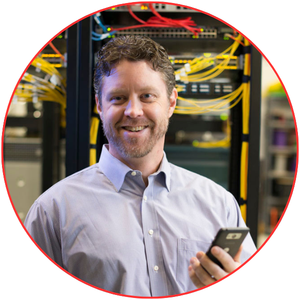 Sean C. Peters is the President and Founder of Tech Squared Inc., an IT services firm he started in 2002 to help businesses solve real technology problems. With over two decades of hands-on experience, Sean and his team specialize in cybersecurity incident response, disaster recovery, and keeping critical systems running when it matters most. He’s led recovery efforts for municipalities, healthcare organizations, and small businesses after major cyber events, often stepping in when previous providers couldn’t get the job done. Sean combines senior-level technical expertise with a straightforward approach that cuts through the noise. When he’s not recovering networks or mentoring his team, he’s focused on protecting the clients who count on him to keep their businesses secure.